
Every winter the same thing happens on housing sites: rain stops the external trades, roofs aren't on, plots aren't watertight, and the programme slides. For subcontractors the risk is two-sided: gangs standing or doing the wrong work, and applications shrinking just as costs stay the same.
What goes wrong in winter?
| Problem | Effect | What helps |
|---|---|---|
| Programme slips without notice | Gangs sent to plots that aren't ready | Weekly re-plan from the live programme |
| Plots not watertight | Internal trades can't start or work is damaged | Prioritise watertight plots for internal work |
| Materials stored outside | Damaged boards, rusted fittings, losses | Order nearer the time; covered storage |
| Lost time not recorded | No evidence for any claim | Record delays and stand-downs on the day |
| Fewer completed stages | Smaller applications, tighter cash | Claim every completed stage; chase retentions |
How do you protect the programme?
- Re-plan weekly against the housebuilder's current programme, not the one from September.
- Allocate gangs to ready plots: internal work on watertight plots, external work on dry days.
- Use pre-orders carefully: bring deliveries closer to the date the plot will be ready, so materials aren't stood in the weather.
- Tell gangs early: change tasks on their phones the night before, not by phone call at 7am.
How do you protect cash flow?
- Apply for everything that's done, every period. Smaller applications on time beat a big one late.
- Keep variations moving: winter brings extra work (temporary protection, re-doing damaged work). Record it as variations with photos.
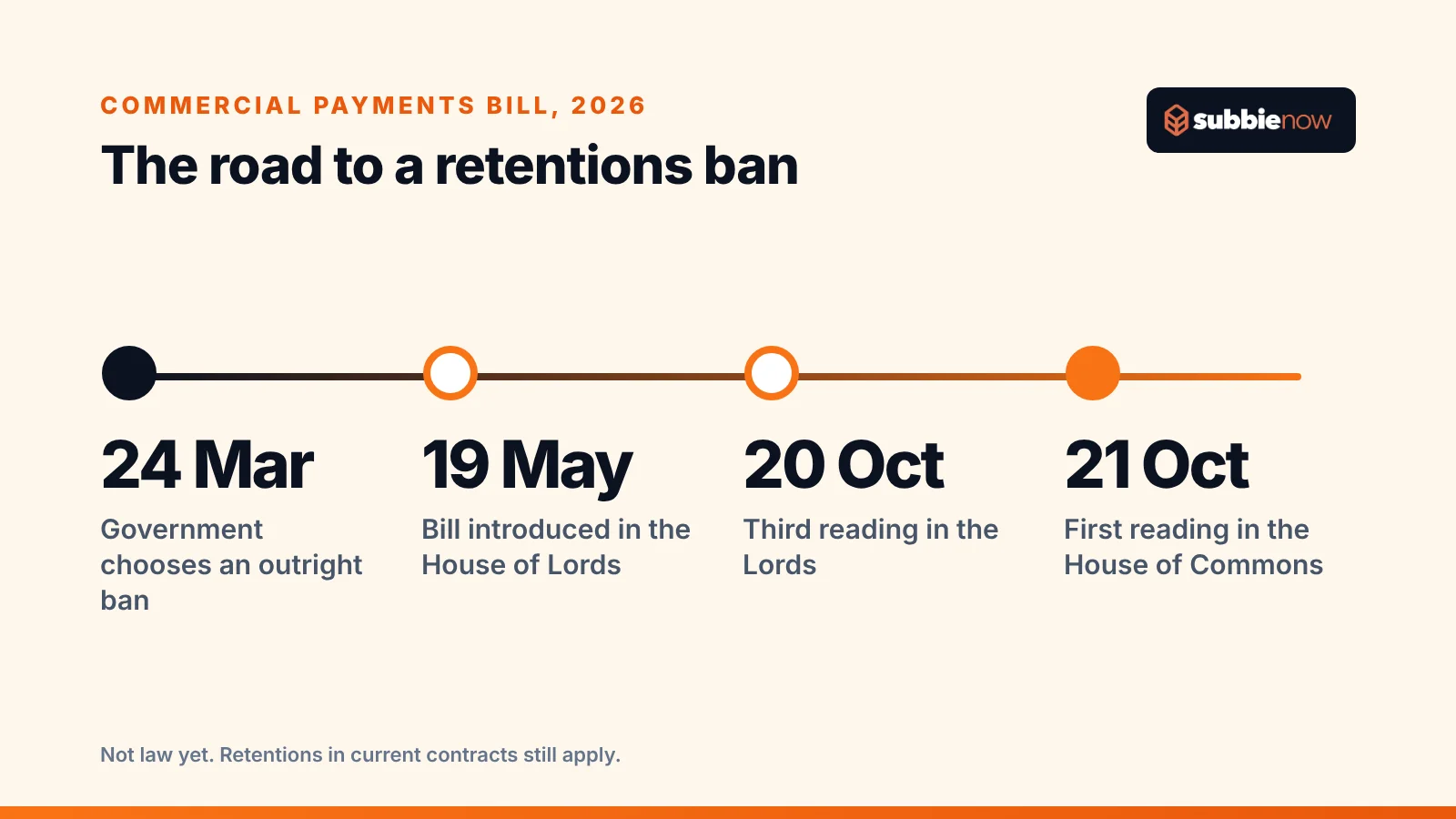
- Chase retentions due from finished sites; see the retentions ban article for why tracking release dates matters.
- Watch plot-level costs: weather damage shows up as extra materials on particular plots in your plot-level P&L.
Record delays on the day
Whether you can claim time or money for weather depends on your subcontract, and many treat bad weather as time-only. But you can only make any claim with evidence: the date, the plots affected, why work stopped, who was stood down, and photos. A site report on the day takes two minutes; rebuilding it in March takes days and rarely convinces anyone.
A worked example
Fictional example. A joinery subcontractor has 12 plots programmed for first-fix carcassing in the second week of December. By Monday, only seven are watertight. The contracts manager moves two fitters to second fix on an earlier phase, reschedules the timber deliveries for the other five plots, and logs a site report with photos showing the plots not ready. The application at month-end includes the seven completed plots and a variation for temporary protection the site manager instructed.
Where SubbieNow fits
SubbieNow's Programme and Programme Calendar with pre-orders and a programme movement report help contracts managers re-plan, tasks move on operatives' phones, site reports record what happened on the day, and plot-level P&L shows what winter is costing. See the features page or book a demo.
Frequently asked questions
Can subcontractors claim for weather delays?
It depends on your subcontract. Many treat exceptionally adverse weather as a ground for extra time but not extra money. Record delays on the day anyway, so you have the evidence if a claim is possible.
How do you stop materials being damaged in winter?
Order closer to when the plot is ready, store materials covered and off the ground, and avoid delivering second-fix items to plots that aren't watertight.
How do you keep cash flow steady in winter?
Claim every completed stage on time, chase retention releases, and keep variations and sales extras moving through applications.